
For many families, navigating the ups and downs of emotional regulation at home can be challenging.
Boredom, transitions, sibling dynamics, and everyday frustrations can bring on big feelings and challenging behaviors. These moments are often signs of dysregulation: when our emotions, energy, or internal state feels out of balance and difficult to manage. Dysregulation is part of being human, for both kids and adults. The goal isn’t to prevent it, but to help kids recognize what’s happening, understand their feelings, and develop regulation skills to respond in ways that work for them.
Here are three simple, supportive ways to help your child build emotional awareness and regulation skills at home.
1. It’s Not About “Fixing” Feelings
When children and teens are feeling overwhelmed, it’s natural to want to make it stop. But trying to fix the feeling can backfire. What helps most is your calm presence and willingness to stay with them through it. Regulation isn’t about snapping out of a feeling, it’s about learning how to move through the feeling.
Try saying:
- “I can see you’re having a hard time. I’m here.”
- “That’s a big feeling. Let’s sit with it together.”
- “It’s okay to feel bored AND I’m confident you can find something to do.”
Being there with your child in a moment of stress helps settle their nervous system and models co-regulation, a key step before self-regulation can take root. After the wave of emotions passes, you can process the cause of the feelings (what we call triggers and sparks) and make a regulation plan for next time.
2. Encourage Emotional Communication
All emotions (and Zones) are okay. Kids thrive when we treat feelings like signals, not problems. Naming and accepting our feelings is a regulation strategy in and of itself. Give them a chance to identify their feelings, using your observations as a starting point:
Try saying:

- “I notice your body is moving fast. What Zone do you think you’re in?”
- “You’ve been really quiet today. Want to check in and talk about your Zone?”
Helping kids connect language to their inner experiences builds emotional literacy and helps reduce the shame or confusion that often comes with big emotions. Visual supports can be especially powerful, giving children of all ages tools to better process their feelings and communicate—even when words are hard to find.
Here’s a free Zones Visual to use at home!
3. Offer Choices
When kids are dysregulated, giving them structured choices can make all the difference. It offers a sense of control and communicates trust. Instead of focusing on the behavior, guide them toward options that support regulation.
Try saying:
- “I wonder if a tool might help. Would it help to use a fidget or listen to music for a few minutes?
- “I’m going to take some deep breaths to help me care for my Zone. Do you want to try a tool too?”
Over time, these options become part of your child’s regulation toolbox, a set of strategies they can draw upon as they problem-solve their feelings. Reinforcing kids’ efforts to use a strategy—even if it doesn’t work perfectly—helps build their confidence and supports growth in emotional regulation.
Bringing Emotional Regulation to Life at Home
You don’t need a perfect routine to support regulation at home. Small, consistent actions make a big difference. Here are a few ways to get started:
✔ Model your own regulation: “I’m feeling a little in the Yellow Zone. I’m going to take a few breaths.”
✔ Do a daily Zones Check-In (learn more about creating a check-in routine in this blog post)
✔ Create a regulation space with sensory tools, books, or pillows
Zones of Regulation Resources to Use at Home
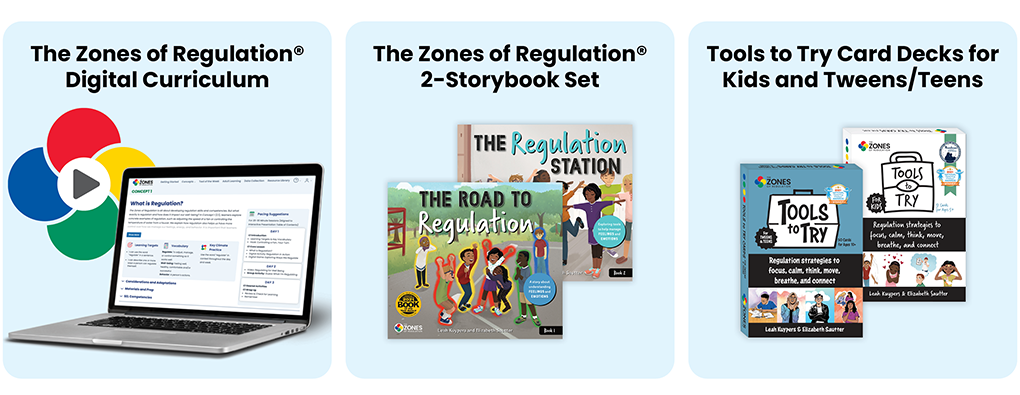
The Zones of Regulation Curriculum includes over 200 visuals and activities to teach and support regulation at home and beyond.
The Zones of Regulation’s Tools to Try Cards and Storybooks are hands-on companion tools to help bring these skills to life.